SpaceWeather: https://spaceweather.com/
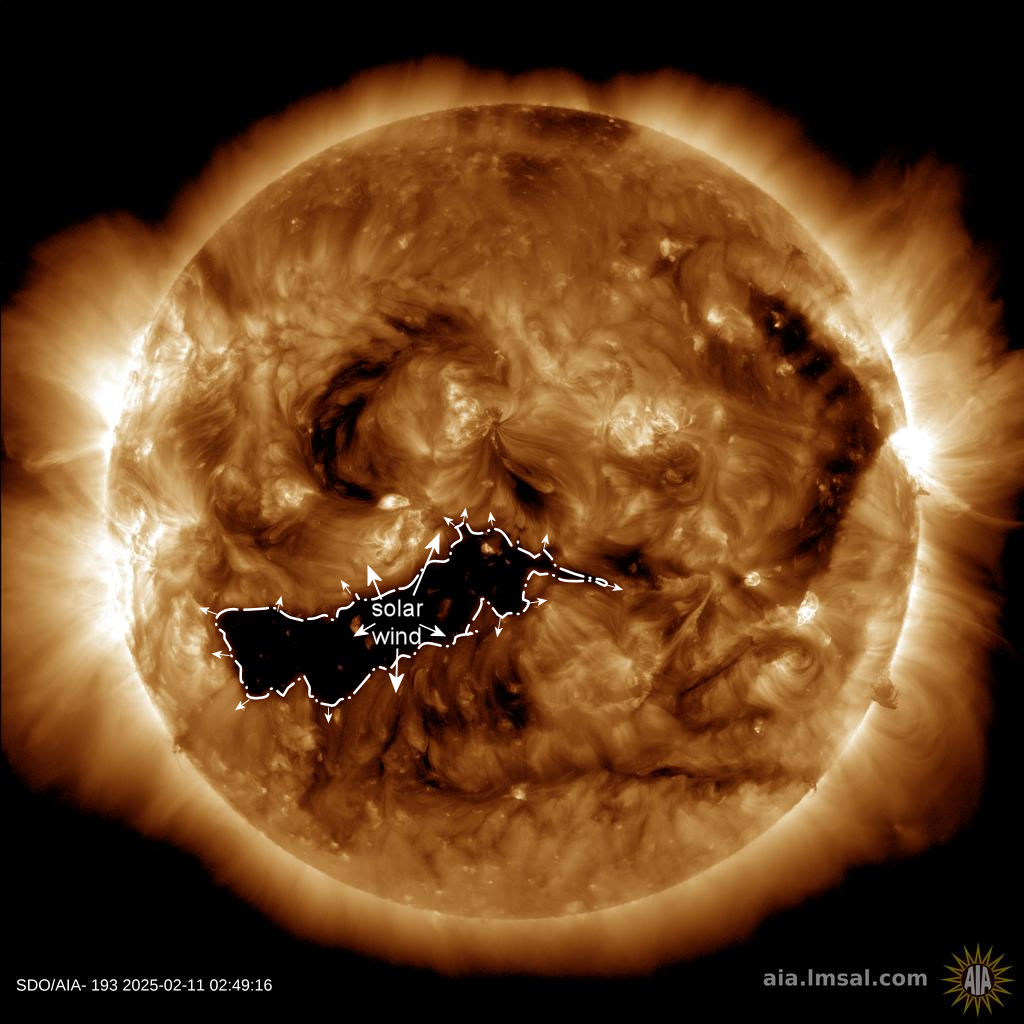
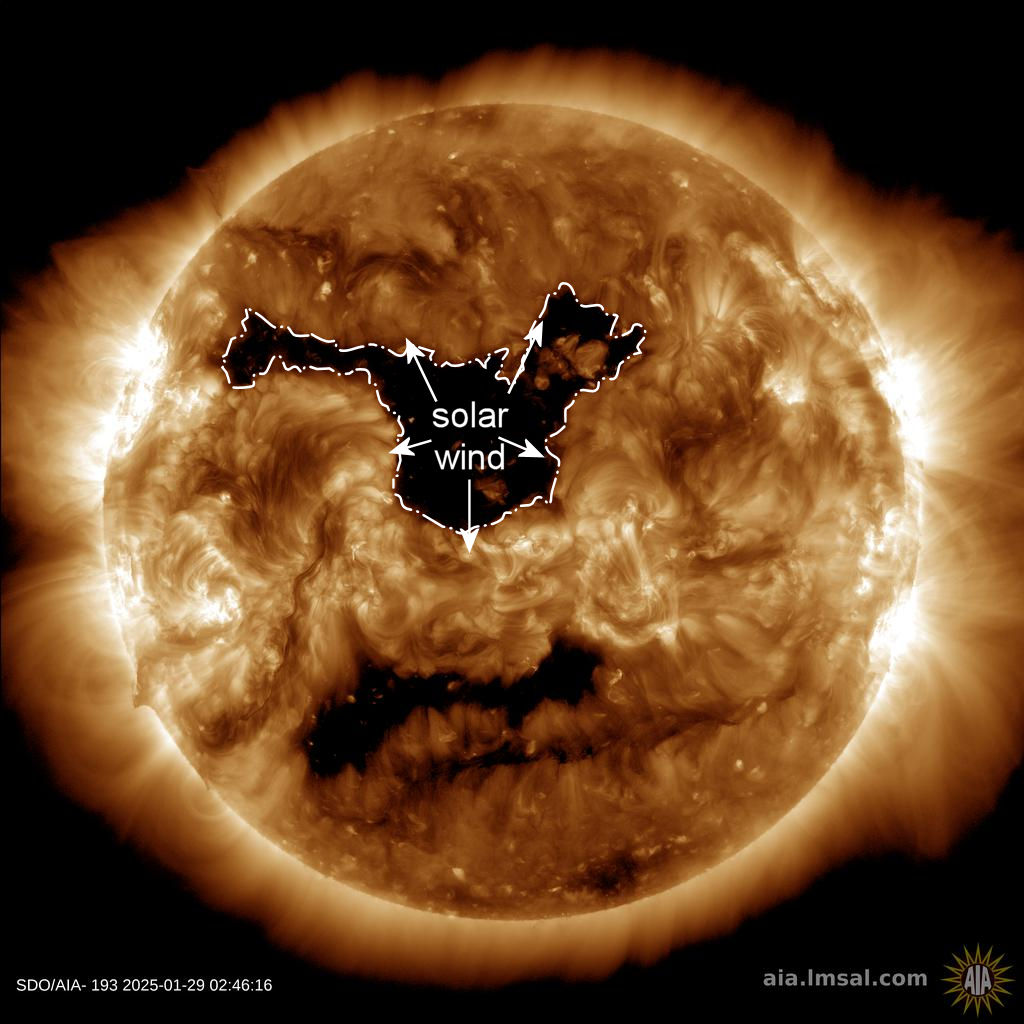
A HOLE IN THE SUN'S ATMOSPHERE: A large hole in the sun's atmosphere is directly facing Earth and blowing a stream of solar wind in our direction. Estimated time of arrival: Feb. 1st. Minor G1-class geomagnetic storms are possible when the gaseous material reaches Earth.
A WARNING FROM THE TREES: How
bad can a solar storm be? Just ask a tree. Unlike human records, which
go back hundreds of years, trees can remember solar storms for
millennia.
Nagoya University doctoral student Fusa
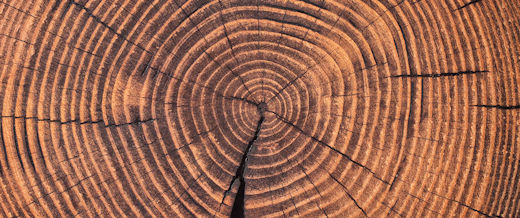
Miyake made the discovery in 2012 while studying rings in the stump of a
1900-year-old Japanese cedar. One ring, in particular, drew her
attention. Grown in the year 774–75 AD, it contained a 12% jump in
carbon-14 (14C), an isotope created by cosmic radiation. The surge was
20 times greater than ordinary fluctuations in cosmic rays. Other teams
confirmed the spike in wood from Germany, Russia, the United States,
Finland, and New Zealand. Whatever happened, trees all over the world
experienced it.
Most researchers think it was a solar storm—an extraordinary one. Often, we point to the Carrington Event of 1859
as the worst-case scenario for solar storms. The 774-75 AD storm was
at least 10 times stronger; if it happened today, it would floor modern
technology. Since Miyake's initial discovery, she and others have
confirmed four more examples (7176 BC, 5259 BC, 664-663 BC, 993 AD).
Researchers call them "Miyake Events."
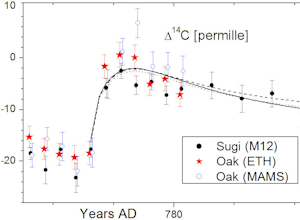 Right: The 774-775 AD carbon-14 spike. [more]
It's not clear that all Miyake Events are
caused by the sun. Supernova explosions and gamma-ray bursts also
produce carbon spikes. However, the evidence tilts toward solar storms.
For each of the confirmed Miyake Events, researchers have found
matching spikes of 10Be and/or 36Cl in ice cores. These isotopes are
known to trace strong solar activity. Moreover, the 774-75 AD Miyake
Event had eyewitnesses; historical reports of auroras in China and England suggest the sun was extremely active around that time.
Miyake Events have placed
dendrochronologists (scientists who study tree rings) in the center of
space weather research. After Miyake’s initial discovery in 2012, the
international tree ring community began working together to look for
evidence of solar superstorms. Their collaboration is called "the
COSMIC initiative." COSMIC results published in a 2018 edition of Nature confirm that Miyake Events in 774-75 AD and 993 AD were indeed global. Trees on five continents recorded carbon spikes.
"There could be additional Miyake Events throughout the Holocene"
says Irina Panyushkina, a member of the COSMIC initiative from the
University of Arizona's Laboratory for Tree-Ring Research. "Finding them
will be a slow and systematic process."

Above: A global map of COSMIC tree ring and ice core measurements [more]
"An important new source for annual 14C measurements are floating tree-ring records
from Europe and the Great Lakes," says Panyushkina. "These are very old
rings that could potentially capture 14C spikes as far back as 15,000
years. Eventually, I believe we will have a complete record of Miyake
Events throughout that period."
Four more candidates for Miyake Events have recently been identified (12,350 BC, 5410 BC, 1052 C, and 1279 C). The candidate in 12,350 BC,
identified from tree rings the French Alps, may be more than twice the
size of any other Miyake Event. Confirmation requires checking trees on
many continents and finding matching spikes of 10Be and 36Cl in ice
cores.
A complete survey of Miyake Events could
tell us how often solar superstorms occur and how much peril the sun
presents to a technological society. Stay tuned for updates from the
trees.