

FIRST PRIORITY: WATER, FOOD, AND SANITATION
1. Fill Every Container While the Water Is Still Running
This is probably the most important thing you can do if a power outage threatens your water supply.
Grab every clean pitcher, empty drinking-water bottle, cooking pot, food-safe bucket, and glass container you can find. Fill them while the water is still flowing and confirm that it is safe to drink.
Fill the bathtub, too, but reserve that water for washing and flushing unless it’s stored in a food-grade liner designed for drinking water. Bathtubs aren’t reliably sanitary drinking-water containers.
The trick: Separate your water into two categories: drinking water and utility water. Label the containers so nobody accidentally drinks something intended for flushing.
Plan on at least one gallon of drinking and basic hygiene water per person per day, and more in hot weather or for special needs. A two-week supply for four people means at least 56 gallons.
And if you’re on a private well with an electric pump, remember that even if you have thousands of gallons below your property, you may have no way to bring that water to the surface.
2. Learn How to Make Questionable Water Safer
If your stored water runs out, you may have to collect water from another source.
Rainwater, clear stream water, and melted snow may look perfectly clean, but that doesn’t mean they’re safe to drink.
If the water is cloudy, allow particles to settle and pour it through a clean cloth or coffee filter. This removes visible debris, not dangerous microorganisms.
The trick: Bring water to a rolling boil for one full minute, or three minutes above 6,500 feet in elevation. Allow it to cool in a clean, covered container.
If boiling isn’t possible, the CDC provides instructions for disinfecting water with plain, unscented household bleach containing 5% to 9% sodium hypochlorite. For clear water, the recommendation is eight drops per gallon, mixed thoroughly and left standing for at least 30 minutes. Cloudy or very cold water requires additional treatment.
Important: Boiling and bleach do not remove fuel, pesticides, heavy metals, or many other chemical contaminants. Never assume water from a swimming pool, chemically contaminated stream, or polluted roof is safe to drink simply because you’ve boiled it.
3. Turn Your Dead Freezer Into an Icebox
Here’s something worth remembering before a blackout ever happens.
Water freezes. And frozen water stores cold remarkably well.
Fill a few clean plastic bottles about three-quarters full, leaving room for expansion, and freeze them. Empty milk jugs can work for cooling purposes if they’re thoroughly cleaned and never mistaken for drinking-water containers.
When the electricity fails, those frozen bottles become giant ice packs.
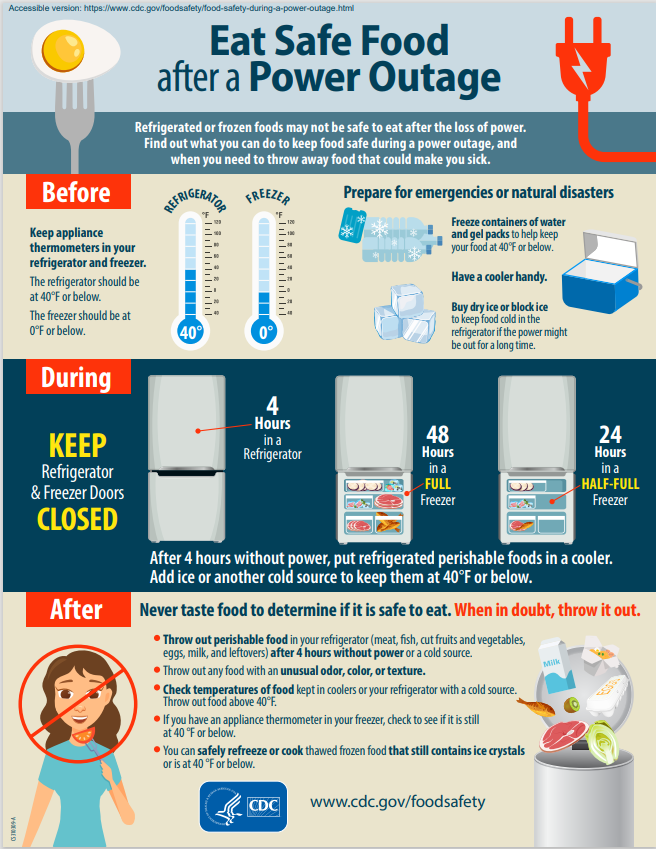
The trick: Keep your freezer door closed. If the freezer is only partially full, group frozen food together to help it hold its temperature. If you have a cooler, transfer perishable refrigerated foods into it with enough ice to maintain 40°F or below.
A closed refrigerator generally keeps food safely cold for about four hours. A full freezer may hold safe temperatures for approximately 48 hours, while a half-full freezer may last around 24 hours.
Don’t assume food is safe merely because it’s still cool to the touch. And please don’t taste questionable food to find out.
4. Build an Ancient Refrigerator From Two Flowerpots
This one’s fascinating, and it comes from regions of the world where people have used evaporative cooling for generations.
It’s called a zeer pot, or pot-in-pot cooler.
You’ll need two unglazed terracotta flowerpots, one smaller than the other, clean sand, water, and a damp cloth.
Place the smaller pot inside the larger one. Fill the space between them with sand, then wet the sand thoroughly. Cover the inner pot with a damp cloth and place the entire arrangement somewhere shaded with good airflow.
As the water evaporates through the porous clay, it draws heat away from the inner chamber.
The trick: Keep the sand damp and the pot out of direct sunlight. It works best in hot, dry climates. Humidity substantially reduces its effectiveness.
This can help prolong the freshness of some whole fruits and vegetables, but it is not a substitute for a refrigerator when storing meat, dairy, cooked leftovers, or medication requiring controlled temperatures. Use a thermometer rather than guessing how cold it gets.
A few flowerpots, sand, and water. That’s a pretty clever use of physics.
5. Cook With Less Fuel Using a Homemade Haybox
Here’s another nearly forgotten technique.
Before modern appliances, people used insulated containers called hayboxes or fireless cookers to conserve cooking fuel.
The idea is simple. A pot of hot food continues losing heat after it comes off the stove. Insulating the pot slows that loss dramatically.
Use a sturdy box or insulated cooler lined with towels or blankets. After heating food thoroughly on an outdoor cooking stove, place the tightly covered cooking pot inside and pack insulating material around it. Keep fabric away from any flame or burner, and never put an actively heated appliance inside the box.
The trick: This works best for retaining heat in already-cooked soups, stews, and other foods. It can reduce the amount of fuel needed for reheating.
However, don’t assume partially cooked beans, meat, or rice will finish safely. Without checking temperatures, food can linger in the bacterial danger zone. Use a food thermometer and keep hot food at or above 140°F, or cool and refrigerate it promptly.
A haybox is a fuel-saving tool, not a magic food sterilizer.
6. Turn Your Backyard Grill Into an Emergency Kitchen
That barbecue sitting outside may become one of your most valuable appliances.
A propane grill with a side burner can heat water, prepare simple meals, or warm canned food. A charcoal grill or properly equipped outdoor fire pit can also serve as a cooking station.
A cast-iron skillet or Dutch oven makes outdoor cooking considerably easier.
The trick: Cook meals that require minimal fuel and cleanup. One-pot soups, canned beans, oatmeal, and simple stews make more sense than elaborate dinners requiring three burners and half your stored water to wash the dishes.
And remember that many canned foods are already fully cooked and can be eaten without heating, provided the product is safe to eat as packaged.
Never use charcoal grills, camping stoves, or outdoor propane appliances inside your house, garage, or tent. Carbon monoxide can kill without warning, and opening a window does not make these devices safe indoors.
7. Keep Your Toilet Working Without Running Water
This is one of those tricks almost nobody thinks about until the toilet won’t flush.
Many conventional gravity-flush toilets can be flushed manually even when the water supply stops.
If the sewer system is still functioning, pour roughly one to two gallons of non-drinking water briskly into the toilet bowl. The sudden flow can initiate the siphon that carries waste away.
You can use stored bathtub water, collected rainwater, or other suitable utility water.
The trick: Keep a bucket beside the toilet and save your drinking water for drinking.
But first, make sure your sewer system is working. If wastewater is backing up, your septic system depends on a disabled pump, or authorities advise against flushing, stop using the toilet. Sending more water into a failed sewer line could turn a manageable problem into an extremely unpleasant one.
8. Make an Emergency Toilet From a Five-Gallon Bucket
When the sewer system itself stops working, you need another plan.
Take a sturdy five-gallon bucket, line it with a heavy-duty trash bag, and put a little absorbent material in the bottom. Shredded paper, untreated sawdust, or kitty litter can help absorb moisture.
If you have a pool noodle, cut a length of it, split it lengthwise, and fit it around the rim of the bucket to make a more comfortable seat.
After each use, cover the waste with absorbent material.
The trick: Keep a secure lid on the bucket between uses. Wear disposable gloves when handling waste, wash your hands afterward, and keep the setup away from food preparation and drinking water.
Follow your local public health department’s instructions for disposal. Never dump untreated waste into streams, storm drains, or gardens.
It isn’t glamorous. But neither is having a house full of people and nowhere to go to the bathroom.
9. Take a Bath With a Washcloth and a Bowl
You don’t need a running shower to stay reasonably clean.
Our grandparents often washed using a basin, a washcloth, and a small amount of warm water.
Pour clean water into a bowl, use a little soap, and wash one section of your body at a time. A separate rinsing cloth can help conserve water.
For hair, dry shampoo may extend the time between washes. A little cornstarch can absorb some oil, although it won’t actually clean your scalp.
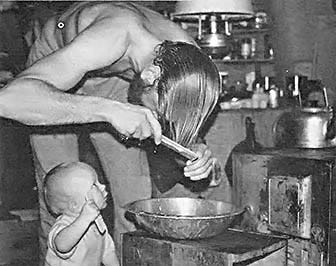
The trick: Use a reusable squeeze bottle or a clean bottle with a small dispensing opening to control the amount of water you use for rinsing.
Keep water used for personal washing separate from drinking water. If anyone is sick, use separate towels, and always prioritize handwashing after using the toilet and before handling food.
You can also string a clothesline across a room or porch to dry hand-washed clothing. Just keep damp fabric away from heaters, flames, and electrical equipment.
SECOND PRIORITY: LIGHT, WARMTH, AND SHELTER
10. Turn a Plastic Water Bottle Into a Lantern
This is one of my favorite little tricks because it’s so simple.
Take a clear plastic water bottle and fill it with clean water. Place a flashlight or headlamp against the bottle so the beam shines into it.
Instead of producing a narrow beam of light, the water scatters the light around the room, creating a makeshift lantern.
A smartphone flashlight can also work.
The trick: Use a translucent milk jug or white plastic container for a softer, more diffused glow. Position the light against the outside of the container rather than submerging anything electrical.
You can also point a flashlight toward a white wall or ceiling to spread its light over a larger area.
And because battery power becomes valuable during an extended outage, don’t leave your phone flashlight running for hours when a separate flashlight is available.
11. Get More Light From Mirrors and Aluminum Foil
When electricity is unavailable, lighting becomes a matter of making every available lumen count.
A mirror, a polished metal baking tray, or a piece of aluminum foil can help redirect light into a dark corner.
Place a battery-powered lantern or flashlight in front of a reflective surface, then adjust the angle until the light reaches the area where you need it most.
The trick: A white wall is an excellent reflector. Aim a flashlight at it, and you may be surprised how much ambient light you can create.
Candles are a possible last resort, but battery-powered lights are much safer. If candles are used, place them in stable holders on nonflammable surfaces, far from curtains, children, pets, and bedding. Never leave them unattended.
12. Shrink Your House to One Room
Here’s something people often overlook.
During a winter blackout, don’t waste your energy trying to keep your entire house warm.
Pick a smaller room with relatively few windows. Shut doors to unused rooms and block drafts around doorways with rolled towels.
Hang blankets over drafty windows, provided you’re not obstructing a necessary escape route.
The trick: Move the family into one room, layer clothing, and use blankets to conserve body heat. If you have a properly installed, vented, and maintained wood stove, its heat may provide an important advantage.
The smaller living area reduces exposure to cold surfaces and drafts, although blankets and body heat alone won’t necessarily make the room safe during extreme cold.
Never use a gas oven for heating. And don’t rely on homemade candle-and-flowerpot heaters. They provide little useful heat compared with the fire and burn risks they introduce.
13. Make a Sleeping Tent Inside Your House
If your bedroom becomes unbearably cold, think smaller.
Pitch a camping tent inside your living room or bedroom, or make a loose canopy using blankets over a sturdy table or frame.
Put insulating layers underneath your sleeping area, such as folded blankets, sleeping pads, or rugs.
Then add warm socks, a hat, and several layers of bedding.
The trick: A smaller sheltered sleeping area can reduce drafts and help retain some warmth around your body. The insulation underneath you is especially important when sleeping on a cold floor.
Keep the tent or canopy ventilated, never use a flame or fuel-burning heater inside it, and keep children’s sleeping spaces free of suffocation hazards.
If the indoor temperature becomes dangerously low, especially for infants, older adults, or medically vulnerable people, relocating to a safe, heated location is more important than trying to tough it out.
14. Make an Old-Fashioned Hot-Water Bottle
This one is almost embarrassingly simple. I personally do this all winter long… even with the grid up and running. It replaced my unhealthy electric blanket many years ago, and it is amazing how well it works.
Fill a proper hot-water bottle with hot, but not boiling, water. Make sure it’s securely sealed, then wrap it in a towel and place it near your feet under the bedding.
If you don’t own a hot-water bottle, a leakproof container specifically rated for hot water may work.
The trick: Warm the bed shortly before getting into it. That little bit of warmth can make an enormous difference in comfort.
Never use boiling water in a plastic bottle that isn’t designed for heat, and never place a hot container directly against your skin. Burns are a very real danger, particularly for children, older adults, and people with reduced sensation.
15. Turn Your Windows Into Homemade Insulation
Windows are often among the biggest sources of heat loss in a house.
When it’s cold outside, close your curtains and hang additional blankets or quilts over particularly drafty windows. Rolled towels along the base of exterior doors can help block cold air.
In summer, reverse the approach.
Hang light-colored curtains, reflective shades, or suitable cardboard panels to block direct sunlight, particularly on west-facing windows.
The trick: If temperatures drop outside at night and outdoor air quality is safe, open windows to flush hot air from the house. Close them before daytime heat builds.
Don’t block bedroom exits, ventilation required by appliances, or fresh-air openings. In wildfire country, remember that opening windows during heavy smoke is a terrible trade.
And forget those internet videos promising miraculous cooling from soda bottles stuck through a board. Without actual airflow and favorable conditions, those devices do not function like air conditioners.
THIRD PRIORITY: COMMUNICATION, POWER, AND INDEPENDENCE
16. Turn Your Car Into an Emergency Charging Station
Your car may be one of the most useful pieces of equipment you own during a blackout.
Most vehicles can charge a phone through a USB port or a compatible 12-volt adapter. Some can also power small devices through an appropriately rated inverter.
The trick: Prioritize charging phones, flashlights, radios, and battery packs over nonessential electronics.
Be mindful that charging devices with the engine off can drain your starting battery. If your vehicle needs to be running, move it completely outdoors into open air, well away from the house and its openings.
Never idle in a garage, even with the garage door open. Carbon monoxide poisoning is an immediate danger.
And if your car is electric, check whether it has a manufacturer-approved external power feature. Some EVs can provide electricity to small appliances, but not all can.
17. Create a Communication System That Doesn’t Need the Internet
If cellular service goes down, how will you reach your family?
Start with the simplest tool you may already own: an AM/FM radio that operates on batteries. A NOAA Weather Radio receiver offers another useful channel for emergency information.
Two-way radios can provide neighborhood communication over limited distances, depending on terrain and equipment. Some require licenses, so learn the rules before relying on them.
And here’s an even better idea: Find the amateur radio operators in your neighborhood before an emergency.
Many ham radio enthusiasts participate in emergency communication networks. Introduce yourself, learn about their capabilities, and see whether local groups offer community emergency communication training.
The trick: Write down important phone numbers, meeting locations, and an out-of-area emergency contact. Agree on a neighborhood meeting point and a time to check in if communications fail.
Sometimes the best backup communication system is a neighbor who knows exactly where to find you.
18. Remember That Cash Still Works Without Electricity
This is something I’ve been encouraging people to think about for a long time.
When banking networks, electronic payment systems, and internet connections fail, that debit card in your wallet may be nothing more than a fancy piece of plastic.
Keep some emergency cash in small bills, securely stored and within your financial means.
Ones, fives, tens, and twenties may be more practical than large denominations if merchants cannot make change.

The trick: Don’t keep all your emergency purchasing power in one place or one form.
For those interested in precious metals, pre-1965 U.S. dimes and quarters contain 90% silver, although their usefulness for everyday purchases depends on whether people are willing and able to recognize and accept them. Cash is likely to be much simpler for short-term emergencies.
And don’t forget that even when you have money, stores may be closed or out of supplies. That’s why a little food and water at home matter more than any method of payment.
19. Make a Household Survival Kit From a Backpack
You don’t need a fancy tactical bug-out bag.
An ordinary backpack will do.
Fill it with things you likely already own: extra socks, sturdy clothing, a rain jacket, medications, a flashlight, spare batteries, a first-aid kit, bottled water, shelf-stable snacks, a manual can opener, some cash, and copies of important documents.
Add a notebook and pencil, a paper map, and a written list of emergency contacts.
The trick: Keep essential items together in a location you can reach quickly, including in the dark. If you must evacuate because of fire, flooding, or another immediate danger, you won’t want to spend twenty minutes searching the house for your prescription glasses.
If you have pets, children, or family members who depend on medical equipment, their needs belong in this plan, too.
20. Organize Your Neighbors Before You Need Them
Of everything on this list, this may be the most important.
You can have all the stored food, battery packs, water filters, and survival gadgets in the world, but if you live in a community where nobody knows anybody, you’re missing one of the most valuable resources available.
Find out who lives nearby.
Who knows first aid? Who has an emergency radio? Who has construction experience? Who lives alone and might need assistance? Who knows how to repair an engine? Who has a garden, livestock, or a private well?
Perhaps one neighbor has a wood stove. Another has a solar battery system. Someone else knows how to preserve food, and another has been a volunteer firefighter for twenty years.
The trick: Organize a neighborhood potluck or coffee gathering and discuss what everyone would do if electricity and cellular communications disappeared for a week.
Keep it voluntary, respect people’s privacy, and establish a simple way to check on one another.
Because when the power goes out, the person living fifty feet away may be considerably more important to your immediate survival than someone sitting in Washington, D.C., assuring you that everything is under control.
A PICTURE IS WORTH A THOUSAND WORDS!
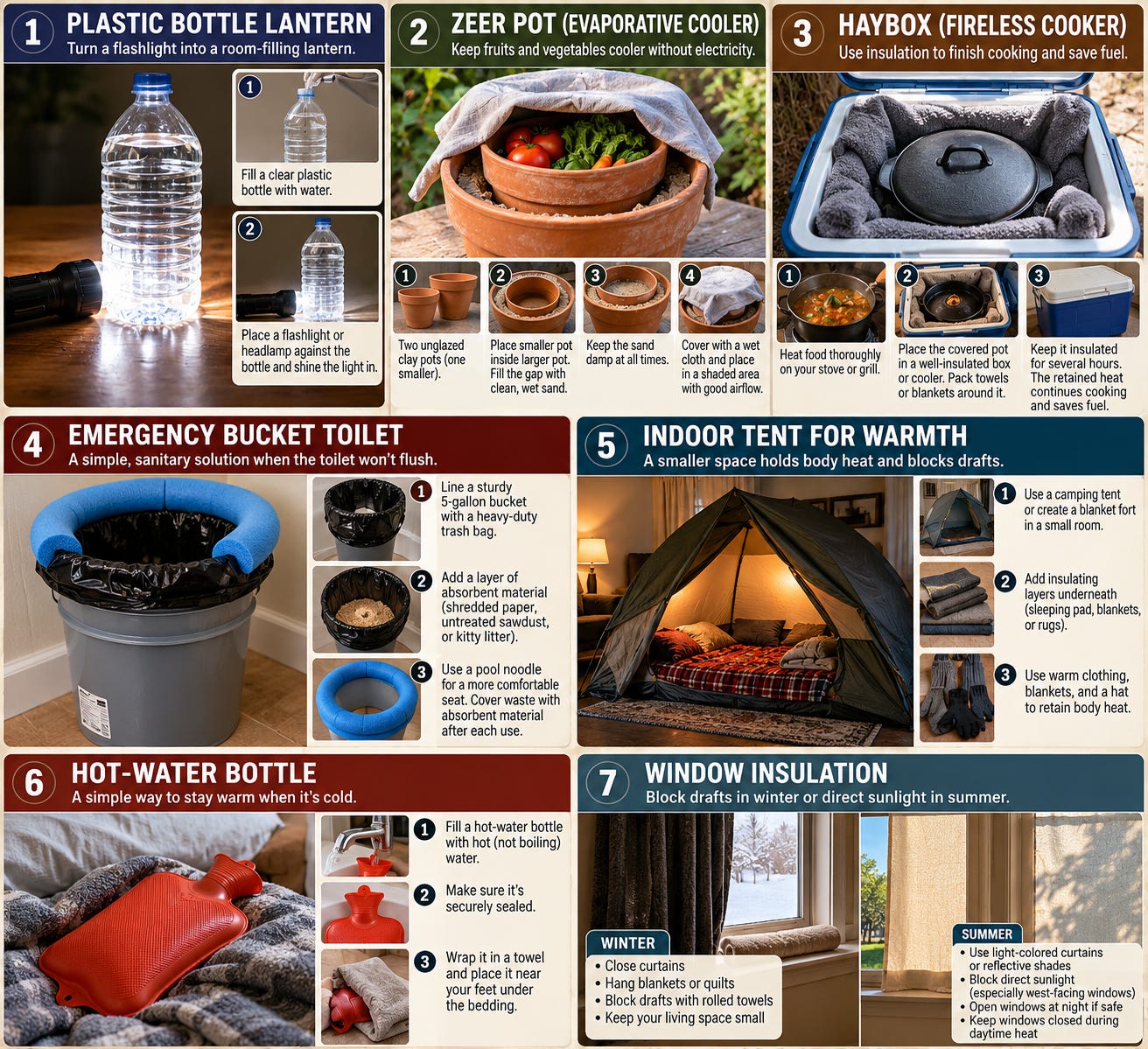
Here are illustrated, step-by-step examples of seven of the more involved survival tricks described above. Most use ordinary household items you may already have lying around. Be sure to read the full instructions and safety precautions before attempting any of them.
FIVE THINGS TO DO IN THE FIRST 30 MINUTES
If the grid goes down unexpectedly, don’t spend the first half hour scrolling through your phone looking for explanations that may not be available.
First, determine whether the outage is isolated or widespread. Check your electrical panel safely, look for utility alerts if communications work, and avoid fallen wires. If you smell gas, leave the area and contact emergency services from a safe location.
Second, protect your water supply. If tap water is still flowing and authorities haven’t issued a warning, fill clean drinking-water containers and the bathtub with utility water.
Third, protect your food. Keep refrigerator and freezer doors closed. Record the time the power failed so you can make informed food-safety decisions.
Fourth, conserve your communications and battery power. Charge essential devices if you have a safe, independent power source, reduce phone brightness, and switch off unnecessary equipment. Use text messages when cellular networks are congested.
Fifth, check on the people around you. Make sure household members are accounted for, identify anyone with urgent medical or electrical needs, and check on vulnerable neighbors when safe.
Don’t forget to unplug sensitive electronics if power is fluctuating, keep flashlights accessible, and leave a light switched on so you’ll know when electricity returns.
A FEW THINGS I WOULD NOT GAMBLE MY LIFE ON
Some popular survival hacks are floating around the internet that concern me.
People recommend using crayons as emergency candles, burning bacon grease in homemade lamps, heating rooms with tea lights under flowerpots, and cooking indoors with improvised metal-can burners. While some of these devices can produce light or heat, they also introduce fire, burn, and potentially dangerous indoor-air risks.
A flowerpot over three candles does not create additional energy. It simply redistributes the heat those candles already produce.
Likewise, a homemade clay-pot refrigerator cannot reliably maintain safe storage temperatures for meat or insulin, and untreated rainwater or stream water isn’t automatically suitable for drinking.
In an emergency, the last thing you need is to burn down your house, poison your family with carbon monoxide, or make everyone sick with contaminated food.
Improvisation is valuable. But understanding its limitations is just as important.
THE MOST IMPORTANT SURVIVAL TOOL ISN’T IN YOUR GARAGE
We’ve spent generations building an extraordinary civilization around convenience.
We have water delivered through pipes, food preserved by electricity, money accessible through invisible networks, and the ability to communicate with someone on the other side of the planet in seconds.
Those are remarkable achievements.
But convenience becomes a vulnerability when we’ve forgotten how to function without it.
I’m not suggesting everyone abandon technology or start living like it’s 1890. I like modern conveniences as much as anyone. What I’m suggesting is that we stop confusing convenience with security, and dependence with progress.
We should be able to cook a meal without an electric stove, find our way home without GPS, keep ourselves clean without a shower, and communicate with our neighbors without a cell tower.
And we should know how to do these things before somebody announces that the system is down, and help may not be coming anytime soon.
Perhaps the most liberating thing about learning these skills is realizing just how much you can accomplish without asking permission, downloading an app, or purchasing another expensive device.
You don’t have to master all 20 techniques tomorrow. Pick three this weekend. Fill some water containers. Make a bottle lantern. Put together an emergency backpack. Find the ham radio operator down the street. And talk to your neighbors.
Whether the next blackout lasts three hours, three days, or considerably longer, one thing remains true.
The less helpless we are, the less dependent we become. And the less dependent we become, the harder it is for fear to dictate our choices.
Decentralize your life. Relearn the basics. Rebuild your independence. And get to know your neighbors.
Because the best time to prepare for a blackout is while the lights are still on.
Now, a question for you to share in the comments below. What’s the one ordinary household item or old-fashioned survival trick you know that most people have forgotten? Share it in the comments. I suspect we can learn quite a bit from one another.
FOR THOSE WHO SIMPLY WANT TO ‘BUY ME A KO-FI, ‘ THERE IS A TIP JAR:
If you find these interviews and articles informative, please become a paid subscriber for under 17¢ a day. I don’t believe in paywalls, but this is how I make a living, so any support is appreciated.


No comments:
Post a Comment