
A NEW CRATER ON THE MOON: This week, researchers announced the discovery of a new crater on the Moon. NASA's Lunar Reconnaissance Orbiter found it near Mare Crisium -- a fresh gouge only two years old. Calculations suggest it was created when a 600-ton comet or asteroid hit the Moon and exploded like a Hiroshima-class bomb.
It begs the question-- how did we miss that?
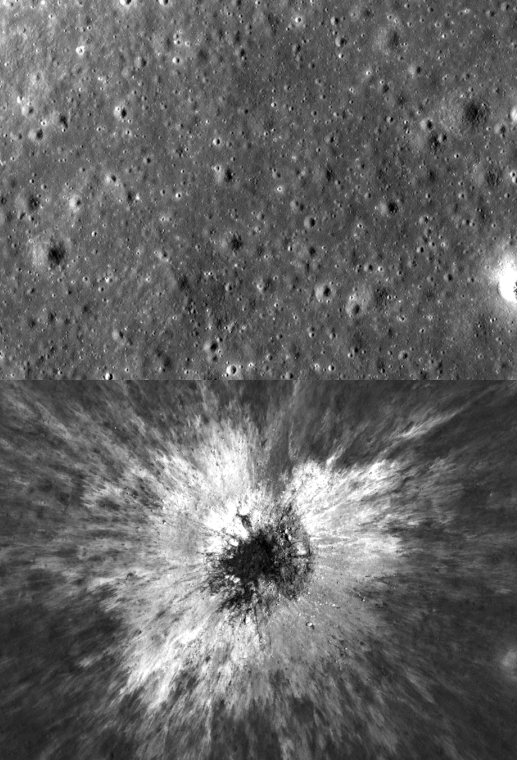
The impact should have produced a flash as bright as Venus, yet no one saw it. LRO looked at the impact site on April 11, 2024--there was nothing. It looked again on May 22, 2024 and saw a 220 meter hole in the ground. Sometime between those two dates a 6.5 × 10¹⁰ kJ explosion occurred.
The answer could be as simple as sunlight. For most (64%) of the 6 weeks between the two LRO snapshots, the sun was shining over the crash site. No flash shows against such intensely sunlit ground. Also, one of the most active lunar impact observatories (ESA's NELIOTA) was off-line in 2024, so the odds of detection during the lunar night were sharply reduced.
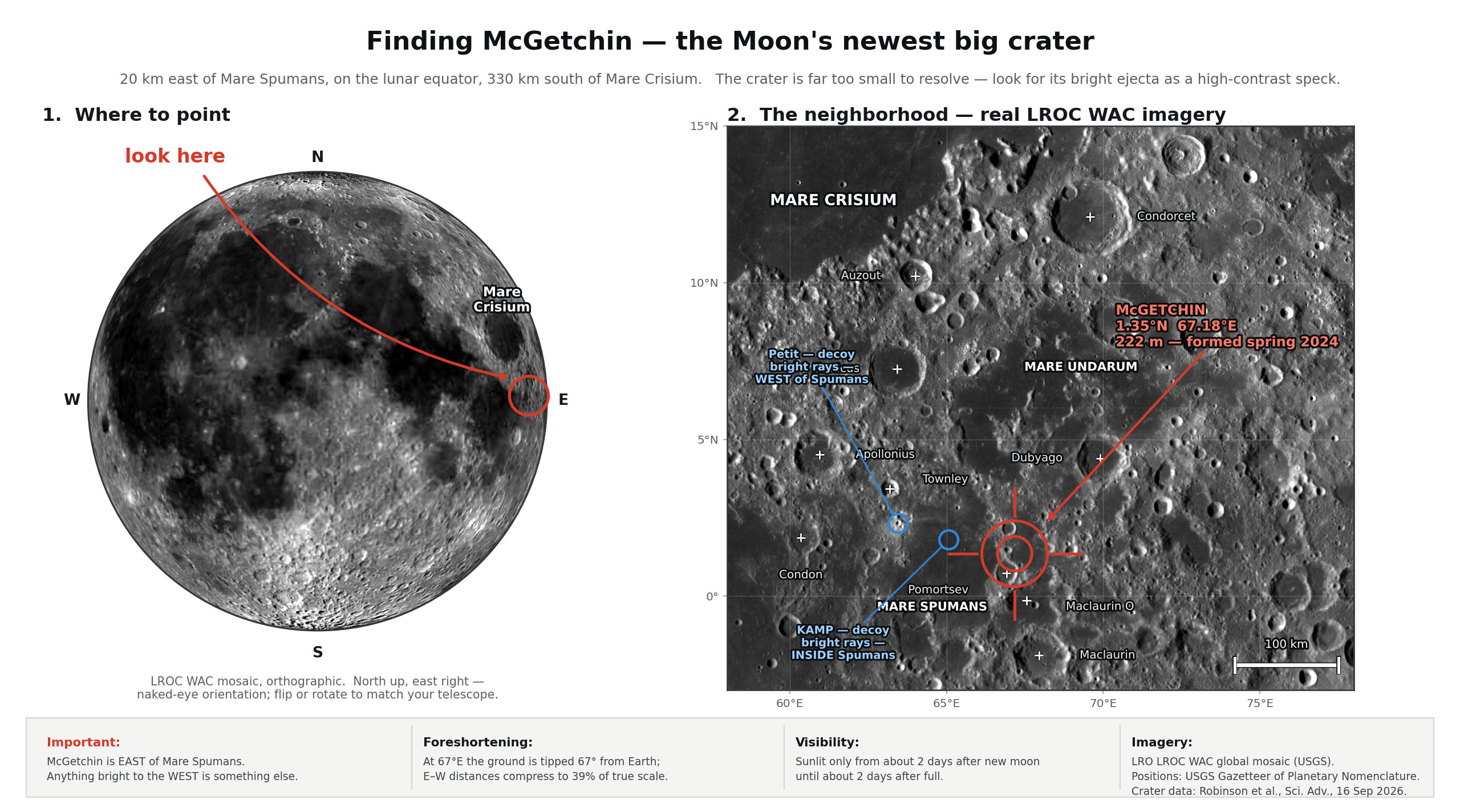 The IAU has named this new crater "McGetchin," after Thomas McGetchin, an Apollo-era scientist who worked on impact ballistics. Now that amateur astronomers know it exists, some are finding they themselves photographed McGetchin Crater without realizing it. Here are two examples: #1, #2 and a finder chart.
Now is a good time to look. The Moon is a waxing gibbous in the evening sky and the crater stays lit until Sept. 27th. Don't expect to resolve the crater, it's quite small, but its fresh ejecta is the brightest thing for miles, so it registers as a high-contrast speck against the dark mare. Submit your images here.
more images: from Pavel Gabzdyl of the Czech Republic, Europe
SPACE WEATHER: https://spaceweather.com/?tab=news


No comments:
Post a Comment