Pangea, Atlantis: Think with me

Pangea, our early planet

THINK WITH ME

Atlantis was Antarctica or ...?

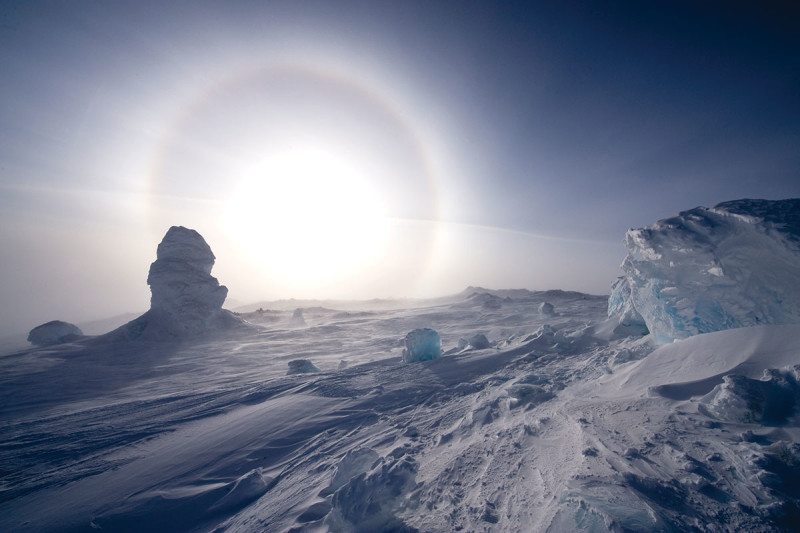
Another theory–that Atlantis was actually a much more temperate version of what is now Antarctica–is based on the work of Charles Hapgood, whose 1958 book “Earth’s Shifting Crust” featured a foreword by Albert Einstein. According to Hapgood, around 12,000 years ago the Earth’s crust shifted, displacing the continent that became Antarctica from a location much further north than it is today. This more temperate continent was home to an advanced civilization, but the sudden shift to its current frigid location doomed the civilization’s inhabitants–the Atlanteans–and their magnificent city was buried under layers of ice. Hapgood’s theory surfaced before the scientific world gained a full understanding of plate tectonics, which largely relegated his “shifting crust” idea to the fringes of Atlantean beliefs.

Pangea Proof?

Some proof that Pangea, the Supercontinent, did exist is that scientists found fossils of the same animals and plants in South America, Africa, Antarctica, India and Australia. If the continents hadn't been joined together at some point then we wouldn't find fossils of the same species in continents that are so far away from each other because the animals wouldn't be able to get across the other side of the world. Also, the same types of rocks were found in South America and Africa. These rocks were found to have formed around the same time period.

As you can see, there does not appear to be any space in the mid-Atlantic where a continent like Atlantis could have existed.  But perhaps a modest size island in the Caribbean could be squeezed into this map.

Newspaper account:


"Located traces of enormous sheets of ancient lava as much as 20 miles thick that spewed from undersea volcanoes. One such deposit covered almost four million square miles on the bottom of the Atlantic, stretching from eastern Canada to Spain and Africa's Ivory Coast."
"For instance, an expedition a year ago in the tropical Atlantic turned up evidence, buried in seafloor sediment, of repeated episodes of rapid global warming that led to massive plant and animal extinction in the distant past."

Both these could have something to do with Atlantis. Depending on how long it took for the lava to accumulate, Atlantis could be beneath the lava. 


"Repeated episodes of global warming that led to mass plant and animal extinction..."
  
discussion here

Michael Zwack: soldiers

Rest in peace: Artist Michael Zwack (1949–2017), member of the Pictures Generation.
Michael Zwack, “Untitled (Soldiers)” (1976), concrete and plastic, 2 13/16 x 2 1/16 x 2 1/16 inches

Michael Zwack (born 1949 in Buffalo, New York) is an internationally exhibited American artist most often associated with The Pictures Generation. He studied sculpture at SUNY Buffalo[1] and later, with artists such as Robert Longo and Cindy Sherman, he co-founded the Hallwalls Gallery, a space run by a non-profit organization of the same name (still open today) in his hometown. Then as did many of his immediate contemporaries he relocated to New York City in the midst of its burgeoning art scene. He has had solo exhibitions at such galleries as Metro pictures and Paul Kasmin in New York and Thaddeus Ropac in Salzburg, Austria and was included in The Pictures Generation exhibition in 2009 at the Metropolitan Museum of Art curated by Douglas Eklund.

You Don't Have to Say You Love Me

In his new memoir, You Don't Have to Say You Love Me, he describes growing up surrounded by poverty, alcoholism and violence.

eclipse coming august

422e3e5f-f0fb-409e-a80f-18c8e141441c.png

**On August 21, 2017, the continental United States will experience the first total solar eclipse to span the entire country since 1918.

Appreciation Friday: Alex Pentek


A very unique monument is being unveiled in Ireland, according to reporter Naomi O’Leary: “Sculpture to be unveiled in Cork to remember generosity of the Choctaw Nation, Native American tribe that sent famine aid to Ireland in 1847.” It’s by artist Alex Pentek. (via Twitter/NaomiOhReally)


Ah, The places I have Lived: NYC

modelling as a brunette after NYC
NEW YORK CITY

When I was 23, I moved from Washington state to New York City to get into show business.  My college classmate BJ's mom was an agent for actors and singers. I wrote Shirley and asked if could live with them in Queens until I got settled and employed as an actress-model-singer. She said, "Yes!"

For fast money I was employed by Model's Service and modeled shoes, sweaters and jeans.  Back then earning $100 a day was like a million bucks... well to me anyway. (And I was able to buy clothes at a greatly reduced price.)

Soon I was working at the Kona Tiki as a hostess (in the Sheraton Hotel, 163 W. 52nd St) when I met singer-actor-model Daniel Drake who was also a healer-reflexologist.  Dan explained about mystics like Edgar Cayce and over time he took me to some of the best bookstores in Manhattan. I read every single book about Edgar Cayce over the years.

At the Kona Tiki, I worked for Cynthia Kipness who was daughter of Broadway producer Joe Kipness who had his own restaurant Old Joe's Pier 52 across the street. My agent Shirley kept me busy working for her, delivering contracts, driving her around, auditioning and singing. Cynthia was Shirley's friend. That's how I got the very cool job and met some very high-powered people.

All this changed me. New York City has it's own power. I was lucky to get an agent but in the process I had make-believe friends who wanted Shirley to be their agent, too. It was like a war was going on between actors. Not nice. I celebrated my 24th birthday with Dan. By late November, I was on the Greyhound back to the midwest. Let's just say, I met bad people, too.

BUT WAIT! My mind was opened. That is a good age to start questioning what you know, or think you know.

Theory, ideas, spirituality, etc. are just that: theory. 

In the next few posts I plan to share theory about Pangea, Atlantis and more.  We have to question more.
New York did that for me. Maybe these posts will open your mind too.


Psychic Ills "See You There" (Official Music Video)

oh shit

Privacy Mythbusting #3: Anonymized data is safe, right? (Er, no.)
Companies often tell you that sharing your data is safe because they "anonymize" it by first removing or obfuscating your personal information. However, this depersonalization leads to only partial anonymity, as companies still usually store and share your data grouped together. This data group can be analyzed, and in many cases, then linked back to you, individually, based on its contents. Detective emoji
Deanonymizing data has been studied for a long time. In 1990, Carnegie Mellon University researcher Latanya Sweeny showed that with just a list of gender, date of birth, and five digit zip code, you can uniquely identify, thereby deanonymizing, 87% of Americans!
Data deanonymization of this nature has taken place time and time again when companies release so-called "anonymized data," even with really good intentions such as for research purposes. For example, even though every effort was taken to anonymize data, people were still deanonymized through Netflix recommendations and AOL search histories.
Now imagine what happens when companies don't even make that effort when sharing your anonymized data. It's like trying to win a game of hide-and-seek like this:
Children trying to hide behind a tree but still visible.
Fig 1: Hide and Seek Champions
The only truly anonymized data is no data. That's why at DuckDuckGo we throw out your personal information every time you search, making sure we don't store anything that could be tied together to identify you. We protect your search history from everyone — even us!
Proudly Private,

Dax's Signature

atwood: bored

In the December 1994 issue, for instance, Atwood described being “Bored” not so much as a mental state as a series of mundane physical tasks, sensations, and observations:
                                                                         m_rub_po picture

BORED

By Margaret Atwood


All those times I was bored
out of my mind. Holding the log
while he sawed it. Holding
the string while he measured, boards,
distances between things, or pounded
stakes into the ground for rows and rows
of lettuces and beets, which I then (bored)
weeded. Or sat in the back
of the car, or sat still in boats,
sat, sat, while at the prow, stern, wheel
he drove, steered, paddled. It
wasn't even boredom, it was looking,
looking hard and up close at the small
details. Myopia. The worn gunwales,
the intricate twill of the seat
cover. The acid crumbs of loam, the granular
pink rock, its igneous veins, the sea-fans
of dry moss, the blackish and then the graying
bristles on the back of his neck.
Sometimes he would whistle, sometimes
I would. The boring rhythm of doing
things over and over, carrying
the wood, drying
the dishes. Such minutiae. It's what
the animals spend most of their time at,
ferrying the sand, grain by grain, from their tunnels,
shuffling the leaves in their burrows. He pointed
such things out, and I would look
at the whorled texture of his square finger, earth under
the nail. Why do I remember it as sunnier
all the time then, although it more often
rained, and more birdsong?
I could hardly wait to get
the hell out of there to
anywhere else. Perhaps though
boredom is happier. It is for dogs or
groundhogs. Now I wouldn't be bored.
Now I would know too much.
Now I would know.


Margaret Atwood is the author of numerous books, including The Robber Bride(1993). Her volume of new poems, Morning in the Burned House, will be published next year.
You can read the full poem here and find more pieces by Atwood in our archives.

Snowball Earth Period?

Paul Hoffman, a geologist at Harvard University who has studied the snowball Earth period, says this work won’t be the last word on how the planet responds to dramatic climate change.
“That such a basic issue should not have been simulated in a model until now, even in a preliminary way, illustrates how much is still to be learned about the snowball Earth phenomena,” he says.

READ

Trump Twitter Museum?

I wish I had gone...
Television political satire The Daily Show opens a "presidential library" in New York displaying a trove of unusual exhibits: Donald Trump's tweets.
WATCH: 

We Are NY Renews

What is the truth? Watch

happy solstice

Surprising Solstice Facts

 
This year, the June solstice falls on two different days: Wednesday, the 21st, for those in Eastern Standard Time, and Tuesday, the 20th, for time zones further west!  Enjoy seven cool (or, is it hot?) solstice facts—and see how many you know!

Aimee Mann - Patient Zero


Aimee Mann is a Grammy- and Oscar-nominated singer-songwriter. In the 80s, she fronted the band ‘Til Tuesday, and in 1993, she released her first solo album. In 2017, Aimee released her 9th album, Mental Illness, and in this episode, she tells the story of how the song “Patient Zero” was made. I talked to Aimee along with the song’s co-writer, Jonathan Coulton. The interview was recorded in front of a live audience, on board the JoCo Cruise, a music and comedy themed cruise organized by Jonathan Coulton. VIA

Interview


just a reminder

  good reminders!  


oh yeah...

oh yeah...

Trace's book